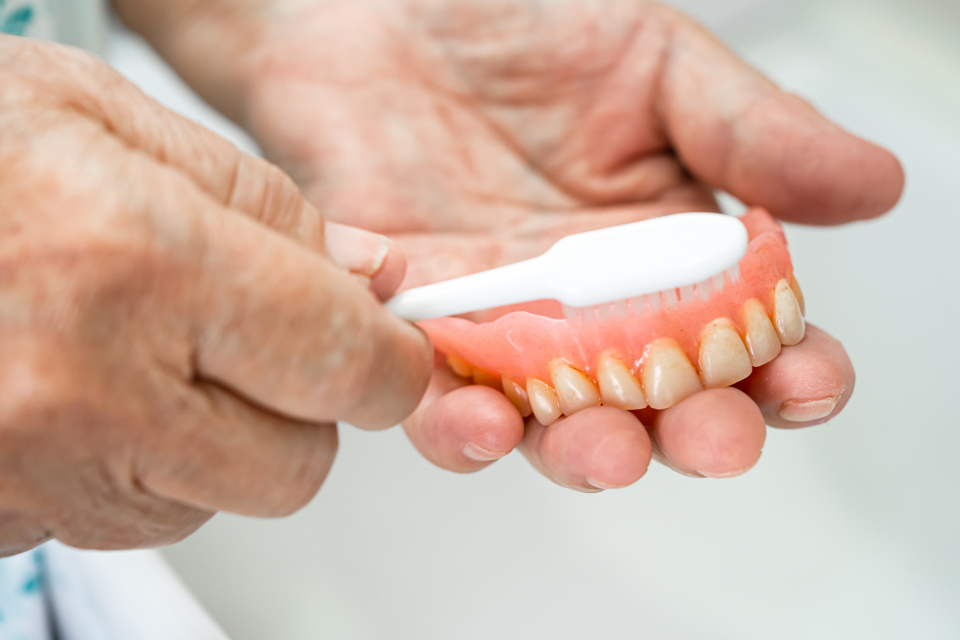
Dentures are specially designed prosthetic teeth created by a dentist to replace missing natural teeth. They can be either full or partial dentures, helping those who have lost their teeth to eat and speak with confidence.
Although they’re artificial, dentures can still become discoloured over time as plaque and food particles build up on the surface. Like natural teeth, they require a consistent daily care routine, with rinsing after meals, thorough brushing and soaking overnight to help maintain their shape.
It’s also important to handle your dentures with care. We recommend you clean them over a folded towel or a sink filled with water to cushion any accidental drops and avoid hot water that may warp the material.
The following tips cover everything you need to know about caring for your dentures and keeping your mouth clean and healthy.
Why Denture Care is Important
Regular denture care is important for the following reasons:
- Keeps your dentures clean and hygienic: Dentures can accumulate plaque and bacteria on the surface, and need daily cleaning to keep them as healthy and hygienic as possible.
- Helps preserve longevity: Like other dental prosthetics, dentures have a limited lifespan. The best way to ensure you get the most out of your artificial teeth is by conducting regular cleaning and maintenance to stop any plaque or bacteria from deteriorating your dentures. This can save you both time and money in organising frequent replacements.
- Keeps your mouth healthy: If your dentures are dirty, this can lead to problems within your mouth, like gum disease, bad breath or infections. Proper care not only keeps your dentures clean, but also helps maintain your oral health.
- Safeguards their aesthetic appeal: Dentures that are left uncleaned can quickly develop stains that affect their appearance. Proper denture care can keep them looking good, helping to boost your confidence and self-esteem.
How to Safely Remove and Handle Your Dentures
A key part of caring for your dentures is understanding how to handle them correctly. To help avoid any damage, consider the following tips:
- Be gentle: Although dentures are designed from strong materials, they can break if handled forcefully. You should always handle your dentures gently.
- Avoid sharp objects: Do not use any sharp objects, such as metal picks or fingernails, when cleaning your dentures, as this can scratch or cause damage to the surface.
- Remove over a soft surface: Dentures are delicate and can break when dropped. Therefore, when handling your dentures, try to always create a soft cushion with a sink filled with water or a soft towel for added safety.
- Avoid hot water: We recommend never exposing your dentures to hot water, as this can warp the plastic material and affect their shape.
How to Care for Your Dentures
To prevent food particles, bacteria and plaque from causing problems, you must maintain a consistent cleaning routine. This should consist of the following care tips:
- Remove and rinse after every meal: After eating, we recommend removing your dentures and giving them a rinse with cool or lukewarm water to remove any food debris. This is a simple step that can help to stop any plaque buildup or staining.
- Brush your dentures daily: Brush your dentures using a soft-bristle brush. Ensure you hold your dentures over a sink filled with water, and apply a small amount of non–abrasive denture cleaner, or mild hand soap. Make sure you don’t use regular toothpaste as well, as these can be harsh and scratch the surface of your dentures. Ensure you focus on the grooves and clasps of your dentures, as these are areas where plaque and debris can easily accumulate.
- Clean your mouth: A key part of your daily cleaning should be focused on taking care of your own gums and remaining natural teeth. Make sure you gently brush your gums, tongue, and the roof of your mouth after removing your dentures with a soft-bristle toothbrush.
- Rinse thoroughly after brushing: Once you finish brushing, always rinse your dentures thoroughly to remove any cleaning solution or soap.
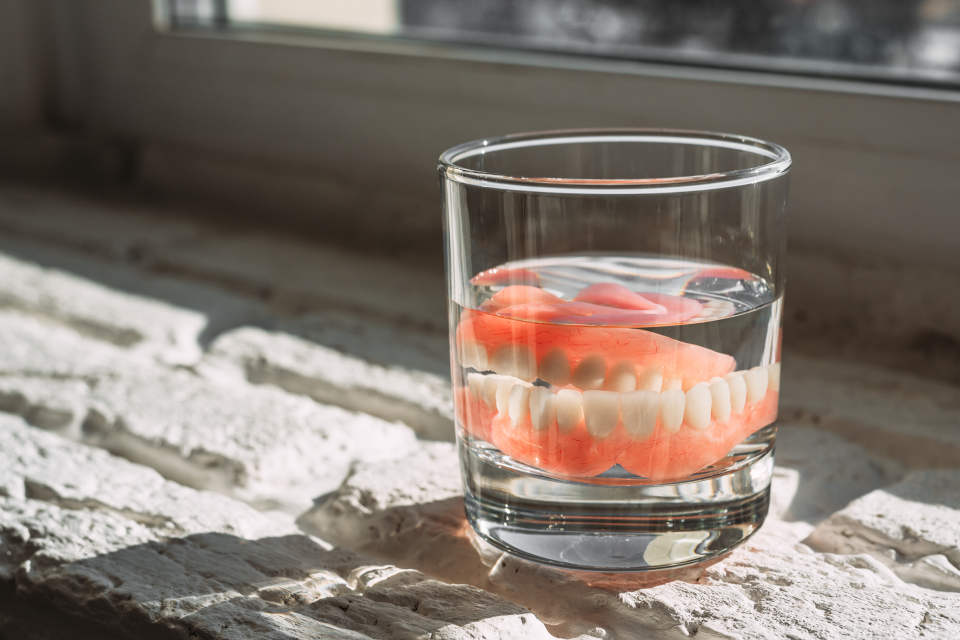
How to Store Dentures When Not in Use
Removing your dentures, especially at night, gives your mouth time to recover from the stress of wearing them all day. To ensure they maintain their shape and health, we recommend the following storage tips:
- Keep them moist: When dentures dry out, they can become brittle and warp, causing them to lose their shape. Therefore, whenever you take your dentures out for long periods or overnight, place them in a container filled with plain water or a specialised soaking solution. You should always check with your dentist for the best storage solution for your situation, and ensure you follow all instructions.
- Store away from any pets or children: We recommend making sure you always store your dentures in a safe location away from any pets or children. Dogs especially love to chew on dentures, so it’s imperative you consider your dentures’ location to avoid any damage.
Common Issues with Dentures and How to Fix Them
You may experience some of the following issues with your dentures, making it important to also understand how they can be treated:
- Dentures feel loose: Loose-feeling dentures can be irritating, but you should understand that this is a very common issue. It’s usually linked to your gums and jawbone changing shape naturally, and will likely need an adjustment or reline from your dentist.
- Bad breath: Bad breath should be treated as one of the telltale signs of improper cleaning. Ensure you are brushing and rinsing your dentures daily, and reach out to your dentist if any halitosis persists.
- Broken dentures: If you drop or mishandle your dentures, causing them to break, you mustn’t try to repair them yourself. Attempting to glue your dentures together can leave them completely unusable, and we recommend keeping your pieces together and contacting your dentist for a professional repair.
When to Replace Your Dentures
Although proper denture care can prolong the durability of your artificial teeth, they will eventually need to be repaired or replaced. If you are experiencing any of the following symptoms or signs, please reach out to your dentist for a professional evaluation:
- Persistent discomfort or sores: Dentures that are fitted correctly should feel comfortable to wear and shouldn’t cause you any pain or discomfort. If you start to notice repeated pain, especially when biting, you should contact your dentist, who can pinpoint the exact cause.
- Difficulty speaking or chewing: When your dentures begin to change shape or deteriorate, this can make it difficult to chew certain foods or speak clearly. Especially if your dentures are moving or making a clicking sound, this is a clear sign they may need to be replaced or modified.
- Loose-fitting dentures that shift: Correctly fitted dentures should always feel secure, even when speaking or chewing. Once they start to feel loose or fall out of your mouth, you should contact your dentist, as they will likely need to be replaced.
- Visible wear: If you spot any visible cracks or damage on your dentures, this should be treated as a clear sign of needing a replacement. Discolouration can also build up over time, especially for people who regularly drink alcohol or coffee with their dentures in. If you spot any signs of wear and tear on your dentures, we recommend reporting these to your dentist.
Importance of Regular Dental Visits
While you should care for your dentures with daily cleaning, regular checkups with a dentist are also important for long-term oral health. Dentists are vital for their ability to carry out the following treatments:
- Oral health check: Regardless of whether you have any symptoms, we recommend seeing your dentist at least once a year for a general checkup on your oral health. Beyond assisting with your dentures, they can examine the mouth and gums for any potential issues, like sores or gum disease, before they get worse.
- Adjustments: They can check your dentures to ensure they still fit comfortably and haven’t been impacted by any wear and tear. Your dentures will need adjustments as your gums and jaw naturally change shape, with your dentist able to adjust or realign them to avoid any discomfort.
- Professional clean: Although a daily clean is an effective way to keep your dentures healthy, some stubborn plaque and bacteria may only be removed during a professional clean. A dentist has access to specialised cleaning tools to carry out a thorough treatment, which should be conducted to keep your dentures durable and hygienic.
Caring for your dentures isn’t just about keeping them clean, it’s about supporting your oral health to improve your smile and confidence. Effective denture care should include a daily routine of rinsing and brushing, with correct handling and storage to keep them clean and comfortable. If you have any concerns over your dentures or if they are feeling uncomfortable, please don’t hesitate to reach out to the supportive team at Hawthorn Road Family Dental. They can help diagnose any issues to support your oral health.